It’s usually one of the first things people ask us, normally because there’s a launch, a conference or a board meeting already sitting in the diary, looking at them.
Short answer: most 60 to 90 second animated explainers take 6 to 8 weeks, from the first call to the final file.
The animation itself is only part of that. The rest is writing, designing, and waiting for everyone on your side to say “yes, love it”.
So here’s where those weeks actually go, based on what we’ve learned making brand videos, explainers and all sort of animated content over the past 15 years.
What are the stages of making an animated video?
Brief and kick-off call. We work out what the video needs to say, who it’s for, where it will live and when you need it. Bring the deadline. We won’t faint.
Script (3 to 5 days). The foundation of everything. A good script is short, clear and says one thing well, which is harder than it sounds.
Black and white storyboard (5 to 7 days). A rough sketch of every scene, so you can see the story flow before anyone picks a colour.
Illustrated storyboard (5 to 7 days). The storyboard meets the style frames: every scene fully designed in colour, so you know exactly what will be animated. No surprises later.
Voiceover (1 to 2 days). We source the voice artist, unless you already have someone in mind. It’s recorded once the script is locked, because the animation is timed to it.
Animation (7 to 10 days). Where the drawings start moving and we stop sleeping quite so well.
Sound design and music (2 to 3 days). The part people only notice when it’s missing, but it can really elevate an animation from great to amazing.
Delivery (1 to 2 days). Final files in all the formats and sizes you need.
All times are in working days.
Why does it add up to 6 to 8 weeks?
If you add up the stages, the pure production time is shorter than 8 weeks. The difference is feedback.
Every stage ends with you reviewing the work, and each stage includes two rounds of revisions.
Script and storyboard are where calendar time most often disappears, because that’s where the decisions are made, and decisions need people, and people go on holiday.
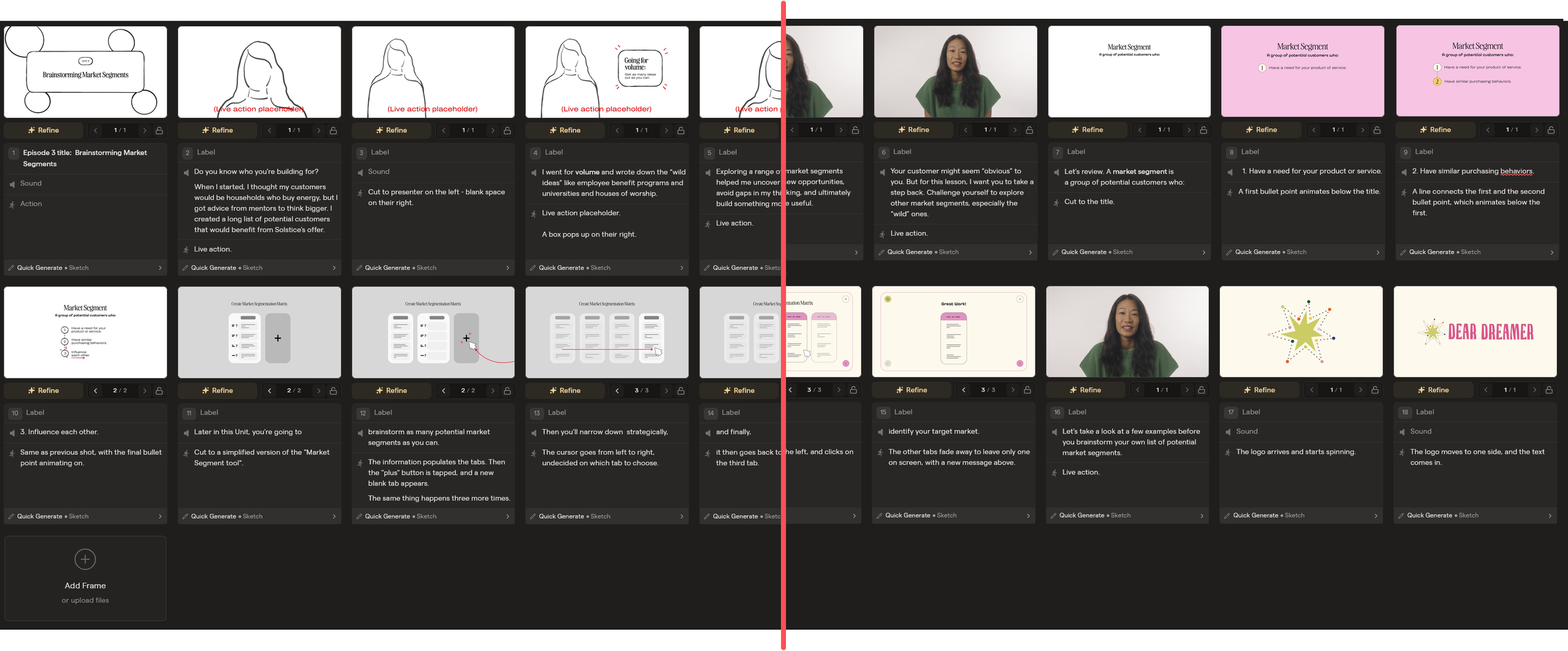
From black and white storyboard, to illustrated storyboard.
What slows an animation project down?

On our side, it’s mostly creative choices:
Style. Frame-by-frame cel animation and 3D take longer than 2D motion design.
Characters. A character who walks, talks and pulls faces takes longer than shapes and text.
Extra versions. Social cut-downs, other languages, subtitles or an interactive version, like the one we made for Mount Sinai.
On your side, the usual suspects are:
feedback arriving from five people on five different days;
a script that changes after the storyboard is approved;
logos, brand guidelines or product screens turning up or changing halfway through.
Is a series of videos faster to make?
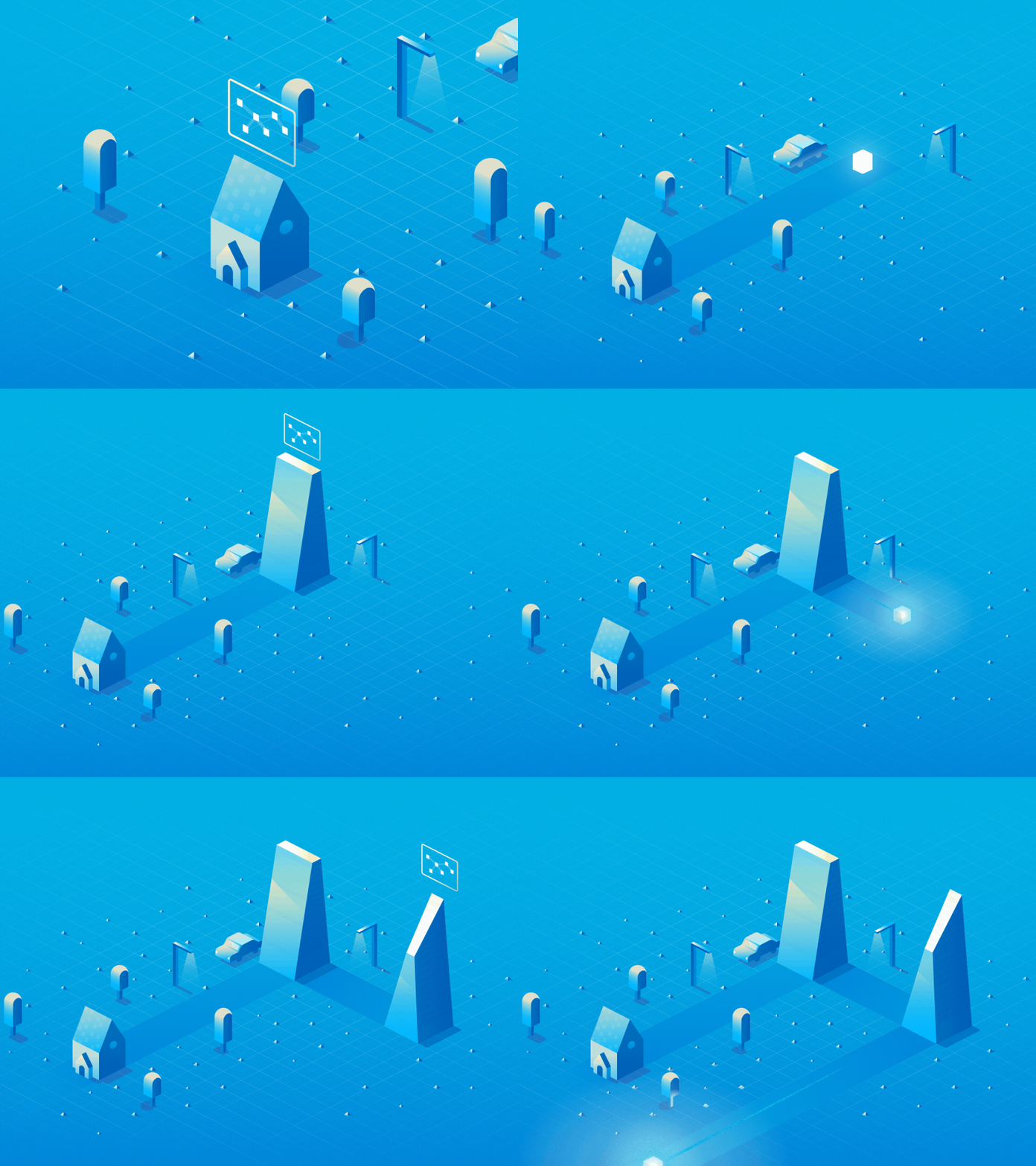
Yes. The first episode does the heavy lifting: characters, colours, type and animation style all get designed once.
After that, each new episode takes around two thirds of the time of the first. Our educational series for Mount Sinai (Sparks) and our cybersecurity series for Siemens were both made this way.
Can you make an animated video in a rush?
Yes, it’s possible. It does cost more, and how much more depends on how much of a rush it is. If your date is fixed, tell us at the first call. We’ll plan backwards from it and agree early on what’s essential and what can come later, such as the social cut-downs.
How can you get your video finished sooner?
Pick one decision-maker who collects feedback from everyone else and sends it in one go.
Send your brand assets at the start: logo files, fonts, colours, product screenshots.
Know the one thing the video has to say. A focused brief means a shorter script, and a shorter script gets approved faster.
Sign off each stage before moving on. Changing the script once animation has started is the classic way to lose a fortnight.
FAQ
How long does a 60 second animated video take?
Usually 6 to 8 weeks from kick-off to delivery, depending on the style and how quickly each stage is approved.
What is the longest part of making an animated video?
Animation is the longest single production stage, at around 7 to 10 days. The approval of script and storyboards can often take more calendar time, though.
Does 3D animation take longer than 2D?
Yes. 3D and cel animation can take 1.2 to 1.5 times as long as 2D.
Do you work with clients outside the UK?
Yes. We’re based in Edinburgh and work with clients internationally, in the UK, Europe, the US, and anywhere with an internet connection.
How many revisions are included?
Two rounds at each stage.
Can you rush a project?
Yes, though it costs more, depending on how tight the deadline is.
Got a date in mind? Get in touch and we’ll tell you honestly whether it’s realistic, or just very optimistic.
